
Market Study.
(also confusingly referred to as the Competitor Study in much of Moodle, sorry for that.)
The Group Design and Business Project is one of the key activities of Bath’s engineering degree program. This is my 9th year being involved and it’s an honour to be involved in the teaching of this unit.
There are a few goals to the market study:
Introduce you to ideas around business, market research, product and corporate strategy
Help prepare you for the commercial viability reviews later in your projects
Feed your curiosity on how businesses really function
How it works:
Part A
Within your team, we want you to each investigate and analyse a different element of the market in which your project operates. This could be a competitor organisation that offers a similar product, but does not need to be. It could be a market dynamic that is of particular relevance to your project or even a customer demographic, an industry regulator or an emerging technology that will have an impact on the business implications of the project / sponsor organisation.
For example in a 6 person team tasked with a project to develop a humanoid robot:
Jim might look at Hyundai who purchased Boston Dynamics and the products they are currently working on.
Henry might look at Tesla and their Optimus robots
Jenny might look at the rise of cheaper Chinese humanoid robots and what that could mean for customer expectations in higher value markets like the US and Europe.
Frank might look at how BMW have been using Figure’s humanoid robots in the factories
Natalie might look at the current market demand for humanoid robots in the US and any regulatory frameworks that could influence their adoption.
Tom might do a trend analysis on relevant technologies that could impact this market.
The aim is to get a well rounded and thorough understanding of the background context that your project sits in. If you’re unsure of whether a choice is suitable, you can ask me or your project supervisor for advice.
EIP students, who are working alone, need only pick one aspect rather than try to do everything.
The information, analysis and insight that you generate will be very useful context and preparatory work for your later business assignment.
Part B
Now that you’ve chosen a market element and explored it thoroughly in Part A, we want you to now try to predict the future… How might this thing you’ve been looking at change or evolve over the next few years (up to you what timeline you makes most sense).
Jim might look at how Hyundai is positioning itself for a big launch into more business customers across the US over the next 2-3 years.
Henry might look at Tesla’s troubles with getting their Optimus robots to be anything more than remotely piloted bar tenders.
Jenny might look at how these very low cost Chinese products are opening up completely unexpected markets and use case for what has always seemed like science fiction products.
Frank might look at how these long term production trials of robots have been proving successful and could see much more widespread adoption.
Natalie might look at how there’s a huge unmet need for humanoid robots in the care sector and how long it might be before one of these car factory robots could be suitable for this sector.
Tom might think about how changes in battery technology could open up far more meaningful applications as the robots can last longer.
Again all this interesting material on what different elements of the market could do over the next few years might have fascinating implications for your projects and could steer you to make design and business choices that have this future scenario in mind.
Lecture Dates:
Kick off Session: Wednesday 4th February - 9:15 Uni Hall
1st online Q&A session: Tuesday 10th Feb
2nd online Q&A session: Tuesday 17th Feb
Deadlines:
All students except EIP: 27th February - 4pm
EIP Deadline: 27th March - 4pm
Submission Portals will be on your respective Moodle Pages
Why is it not called the Competitor Study anymore? Because lots of projects do not have competitors, or there aren’t enough for each team member to do a different one. Market Study allows for a much wider inclusion of topics. Topics you could look at include among other things:
Key Competitor
Interesting project Alternative
Significant Customer / Segment
The industry Regulator
New industry Hypothesis
Potentially threatening Emerging Technology
Prominent Cultural or Demographic Shift
Aspirational Worthy Rival
Breakthrough new Business Model
Dominant Industry Practise
Disruptive Market Challenger
And many more…
Part A - Current Situation [50%]
Explain to us very clearly and thoroughly what market aspect you have chosen. Who / what they are, what they’re up to, what has been happening recently etc…
You do not need to use only academic references, any source can be used to support your case. But be aware if there is a bias in the material. It is not uncommon for business sources to spin facts to make them look good.
Part B - Future Scenario [50%]
Explain to us a prediction of how your chosen market aspect may evolve in the future and what future scenarios it may create that could have some relevance for the project or your sponsor organisation.
Extra Marking Guidance:
Presentation of your answers is very important, a clear, well researched but concise and easy to understand answer will score more highly than one that is hard to follow or full of unnecessary / waffling repetitive text.
Try to show deep expertise and understanding. You do not need to be exhaustive with your answers, a focus on less things but done to a deeper depth will score more highly than shallow box ticking or superficial fact regurgitation. So pick the most important and relevant aspects rather than spreading yourself too thin trying to say everything.
For part B especially, remember this is not a maths assignment, there is no right or wrong answer here, only believable arguments or not believable arguments. So try to use as much data as you can, from different sources to triangulate a trend. Predicting the future is impossible, but we want to be vaguely right rather than precisely wrong.
More Detail:
When writing your answer make sure each part is clearly labelled.
2,000 word limit max (not the usual +10%)

Assignments with no right answer.
One of the biggest frustrations of any engineering student is a problem without a single solution…
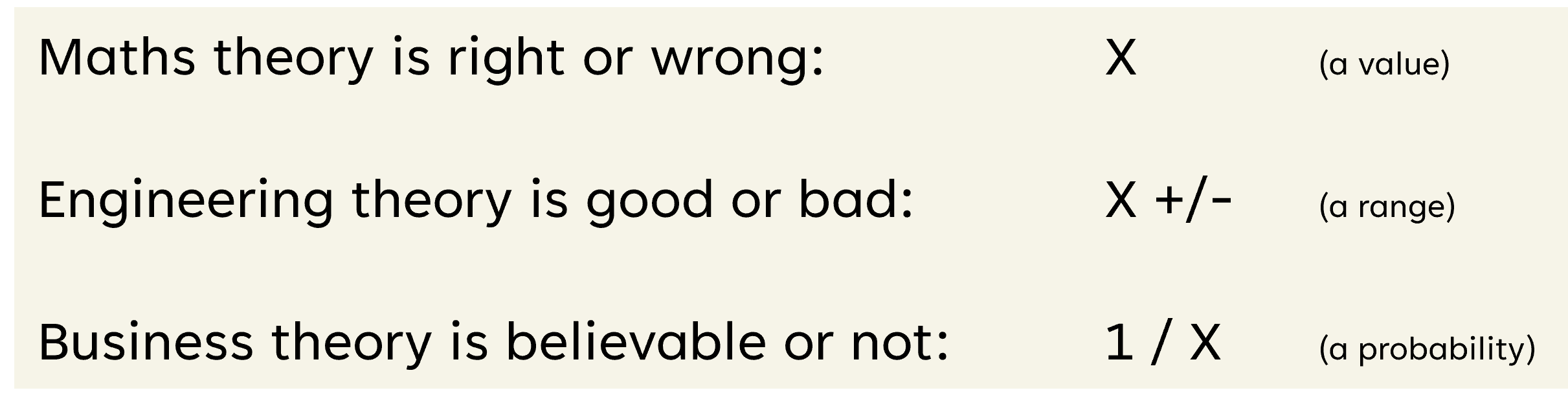
Assignments with no right answer do not make them impossible or pointless. It’s just a different way of thinking. As an engineer there are good ways and bad ways to do things. If I asked 100 engineers to design a bridge, they may all look similar, but we still get a range of solutions.
It’s the same in business, except business is all built on probabilities. Nothing is certain and just because something worked one time doesn’t mean it will next time. If I asked 100 business people to come up with a plan of what we should do, the plan that we think is most likely to work is the one we should take (most of the time).
General Tips & Advice:
It’s easy to think that for any assignment, if you just get the right answer you’ll be judged on that. But for an assignment where there is no right answer, such as “Write a business plan for X” or “Propose a Strategy for company Y” or “Design a new Z”… the temptation is to think that the system is too subjective to ever get a good score.
The important thing to know and realise is that if the assignment is open ended without a single correct answer, then you will not be judged on your answer alone, but on the rigour and method that went into forming it.
The more specific the better
For example, lets say you’re asked to conduct some market research on a company that makes swimming hats (but it could be anything). One approach would be to google swimming hats, write down a few alternative brands as a look into the competitors and then find a market analysis report in the library and show that the sports goods market is work billions and growing by 7.2% a year.
All vaguely interesting and relevant, but hardly rigorous or insightful. The data is also too broad and superficial to be useful for any further discussions.
A better approach would be to perhaps explore some of the reasons why people would wear a swimming hat and then find corresponding statistics to see if those reasons are likely to increase or not (number of swimming races and events, growth in outdoor swimming etc…)? You can then use this specific data to base a strategy on. For example would a growth in the number of outdoor swimming enthusiasts make a market for a warmer thermal swimming hats more appealing? Thus showing the market potential for a range of related products, with a single logical story and relevant data.
Shouldn’t I do both?
If you have the space, a mix of top level data and specific sources would be good. But if space is short, focus on the local, the specific and narrower-the-better data sources.
You can never do everything, better to pick the most interesting elements and show them to a good depth than be spread too thin and come across as superficial. Work smarter rather than harder.
Triangulate your Sources and Build a Case
If no credible single source is available then use multiple sources and see if they converge to a single solution? It’s always a good idea to make sure you’re not seeing conclusions, causations or implications that don’t exist. So if lots of different sources are all pointing at the same thing it adds credibility to your work and the result.
Even if the perfect source is just waiting for you, remember, I’m not marking if you’re right or wrong, I’m assessing the quality of your research. So find a second and third source to check it’s legitimacy and reinforce your message.
Compare, Compare & Compare Again!
You can assume the reader is informed, so I don’t need the really obvious stuff explained, but I won’t know everything about your chosen industry, if you’re trying to make a point, make sure you’ve given sufficient context to the problem and therefore the solution. The best way to do this is through comparison to others. Statements left without context are not rigorous or defendable, they are blind stabs in the dark, even if right.
Always remember we’re not judging if you’re right, we’re judging how good your research and depth of thinking is!
Past Examples:
I’ve tried to go through the achieves looking for examples of great work. BUT, this is work from a different task. In this task there was no word limit, there was a page limit. The task was to describe a business, describe the market they operate in, their business model, what strategy you thought was steering their actions and finally, what would you do differently if you were in charge. So they had a lot more to cover than you do now.
The other thing I’ve tried to do is find examples that don’t relate to the current selection of projects.
Three examples of “Excellent - Exceptional” argumentation, research quality and effective storytelling:
FAQ
Q1: Can we each do a different competitor? Or do we have to do a different topic?
Yes you can each do different competitors, that’s not a problem. But try to make your research specific to the company so that your supervisor is not read reports that feel the same except for a competitor name change!
Q2: I can’t find any data on this company online. Is it going to be bad report? Should I choose someone else? Will it affect my mark? (or some variation of this…)
Absolutely not. I’m not particularly interested in you finding the “right answer” online somewhere, the detailed specifics, precise figures or correct numbers etc… that’s really not the point. The point of the exercise is to form an interesting argument, an interesting piece of research. So if you’re doing a start-up with no published figures of any type. You can still show that these are the competitors, these are the customers. Their offerings are like this, there preferences seem to be like that, here are the overlaps, this is where my organisation fits in. From this information on the market size and this information on how many customers they are claiming to have, I estimate their current turnover to be this. From the market trends X, Y and Z it looks to be that the market outlook for this company is this. etc etc etc.
The problem with finding the answer online somewhere is you tend to stop doing any further thinking…. the market growth is (apparently according to some nameless analyst somewhere) 10% a year. So what? What does that mean for our company? Just because the coffee industry as a whole is growing (just to refer to my favourite example), does that mean our local coffee shop will see a rise in customer numbers?
I tend to prefer reports where the data isn’t sitting there in front of you, because then you have to read around the subject, triangulate an answer, form your own argument for what might be going on. It’s a gift for you to demonstrate your ability.
Q3: How do I reference something that I can’t link to on the internet?
References existed long before the internet did. It is simply a statement of where your information came from. If I chose too, I should be able to challenge your references and say, give me references [1] [4] and [23] and you could perhaps show me transcripts of conversations, or contact details of the people themselves or other books or some other non-online content. Whatever it may be.